
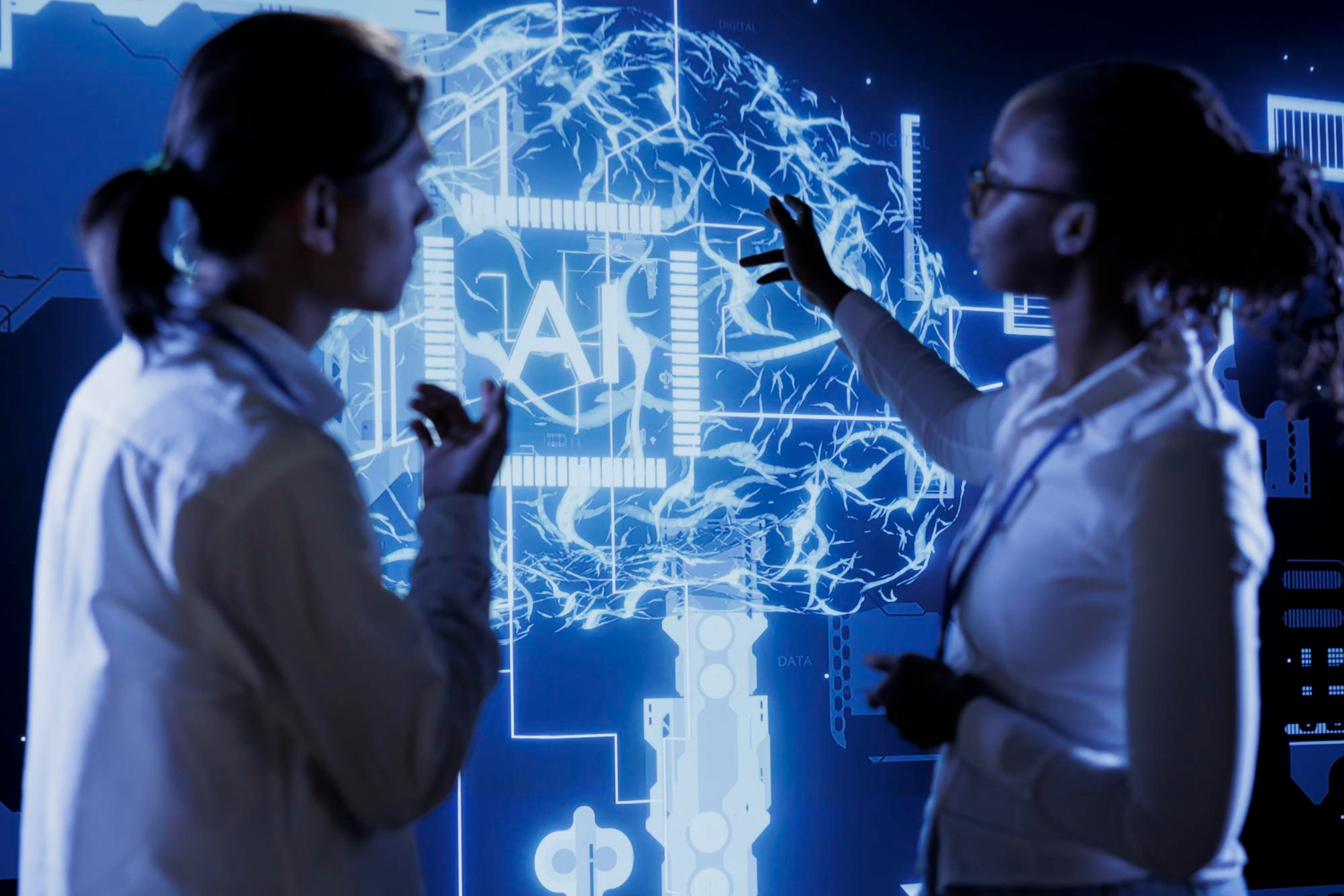
Artificial Intelligence (AI) and Machine Learning (ML) have emerged as two of the most transformative technologies of our time. These technologies are not only reshaping industries but also redefining how we interact with the digital world. In this blog post, we’ll explore the latest advancements in AI and ML, their applications across various sectors, and what the future holds.
1. Understanding AI and Machine Learning
AI refers to the simulation of human intelligence in machines that are designed to think and act like humans. Machine Learning, a subset of AI, involves algorithms and statistical models that enable computers to perform tasks without explicit instructions by learning from data.
Recent advancements have made AI and ML more accessible, powerful, and versatile. From simple automation to complex problem-solving, these technologies are driving innovation at an unprecedented pace.
2. Key Advancements in AI and Machine Learning
a. Natural Language Processing (NLP)
One of the most significant advancements in AI is NLP, which allows machines to understand, interpret, and respond to human language. Tools like GPT-4 have demonstrated the potential of NLP by generating human-like text, translating languages, and even answering questions with remarkable accuracy.
b. Computer Vision
Computer vision, a field that enables machines to interpret and make decisions based on visual data, has seen major breakthroughs. Applications such as facial recognition, medical imaging, and autonomous vehicles are leveraging this technology to achieve tasks that were once deemed impossible.
c. Reinforcement Learning
Reinforcement learning, where algorithms learn by interacting with their environment and receiving feedback, has enabled AI systems to perform tasks with minimal human intervention. This has been pivotal in the development of advanced robotics, gaming, and even financial trading systems.
d. AI in Healthcare
AI and ML are revolutionizing healthcare by providing tools for early disease detection, personalized medicine, and efficient patient care. Machine learning models can analyze vast amounts of data to predict patient outcomes, recommend treatments, and even assist in complex surgeries.
e. Automated Machine Learning (AutoML)
AutoML is democratizing machine learning by automating the process of model selection, hyperparameter tuning, and deployment. This allows non-experts to leverage machine learning for their needs, expanding the reach and impact of AI technologies.
3. Applications Across Industries
AI and ML are making waves across various sectors:
- Retail: Personalization engines powered by AI analyze customer behavior to recommend products, optimize pricing, and enhance the overall shopping experience.
- Finance: AI-driven algorithms are used for fraud detection, risk management, and personalized financial advice.
- Manufacturing: Predictive maintenance, powered by ML, helps companies reduce downtime and increase efficiency.
- Education: AI tutors provide personalized learning experiences, adapting to the needs and pace of individual students.
4. Challenges and Ethical Considerations
While AI and ML offer immense potential, they also come with challenges. Issues like data privacy, algorithmic bias, and the potential for job displacement must be carefully managed. As AI continues to evolve, it is essential to develop ethical frameworks to ensure that these technologies benefit society as a whole.
5. The Future of AI and Machine Learning
Looking ahead, the future of AI and ML is incredibly promising. As computing power continues to grow and data becomes more abundant, we can expect these technologies to become even more integrated into our daily lives. Innovations such as explainable AI, where models can provide understandable reasons for their decisions, and AI-driven creativity in fields like art and music, are just the beginning.
The fusion of AI with other emerging technologies like quantum computing and the Internet of Things (IoT) will likely open up new possibilities that we can only imagine today.
Conclusion
AI and Machine Learning are at the forefront of the technological revolution, driving progress across every sector. By understanding the latest advancements and their applications, businesses and individuals alike can better prepare for a future where AI plays an increasingly central role. The key will be to harness these technologies responsibly, ensuring they contribute positively to society while unlocking new levels of innovation.